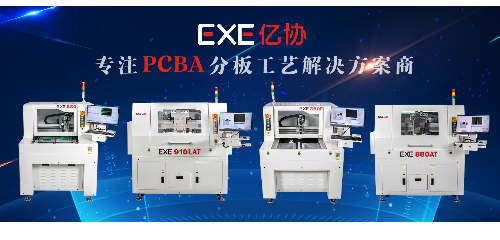
In-depth Analysis of the Core Technologies of PCB Lead Cutting Machine: How to Achieve Both Precision and Efficiency?
In the highly competitive field of electronics manufacturing, the PCB Lead Cutting Machine plays a pivotal role. It is not merely a tool for trimming excess leads; it is the linchpin that determines the quality and productivity of the entire PCB production process. This article delves deep into the core technologies underpinning these machines to uncover how they manage to strike the delicate balance between precision and efficiency.
I. The Precision Imperative
Precision is the hallmark of a high-quality PCB Lead Cutting Machine. At the microscopic level, even the tiniest deviation in lead cutting can spell disaster for the functionality of the final electronic product. The machine achieves this level of precision through a combination of advanced optical recognition systems and high-precision mechanical actuators.
Optical recognition technology allows the machine to accurately identify the position and orientation of each lead on the PCB. Sophisticated cameras, often equipped with high-resolution lenses and intelligent image processing software, capture detailed images of the PCB surface. These images are then analyzed in real-time to precisely locate the leads, ensuring that the cutting tool is directed with pinpoint accuracy.
The mechanical actuators, on the other hand, are responsible for translating the digital instructions from the optical recognition system into physical cutting movements. These actuators are typically engineered with ultra-high precision ball screws, linear guides, and servo motors. The ball screws and linear guides minimize friction and provide extremely smooth and accurate linear motion, while the servo motors offer precise control over speed, acceleration, and position. This synergy between optical and mechanical components enables the machine to achieve cutting tolerances as low as a few microns, a level of precision that is essential for modern electronics.
II. Efficiency Enhancement Strategies
While precision is non-negotiable, efficiency is equally crucial in today's fast-paced manufacturing environment. PCB Lead Cutting Machines have evolved several innovative strategies to boost productivity without compromising on quality.
One of the primary means of enhancing efficiency is through high-speed cutting mechanisms. Advanced cutting tools, often made from super-hard materials such as diamond-coated tungsten carbide, are capable of slicing through leads at remarkable speeds. These tools are designed with optimized geometries to reduce cutting forces and minimize heat generation, which not only allows for faster cutting but also prolongs the tool life.
Another key aspect is the integration of intelligent automation systems. These systems enable the machine to operate autonomously for extended periods, reducing the need for human intervention. Automated loading and unloading mechanisms, for example, can quickly and accurately position PCBs onto the cutting stage and remove them once the process is complete. This seamless flow of workpieces not only saves time but also minimizes the risk of errors associated with manual handling.
Furthermore, modern PCB Lead Cutting Machines are equipped with advanced software algorithms that optimize the cutting sequence. By analyzing the layout of the PCB and the distribution of leads, the software determines the most efficient path for the cutting tool to follow. This reduces unnecessary movement and idle time, further maximizing the overall productivity of the machine.
III. The Synergistic Relationship between Precision and Efficiency
It is important to note that precision and efficiency in PCB Lead Cutting Machines are not mutually exclusive; rather, they are intertwined in a complex and delicate relationship. The pursuit of higher precision often requires more sophisticated technology and additional processing time, which could potentially impact efficiency. Conversely, a sole focus on efficiency might lead to compromises in precision, endangering the integrity of the final product.
To overcome this challenge, manufacturers have invested significant efforts in research and development. They have developed hybrid technologies that combine the best of both worlds. For instance, some machines employ predictive maintenance systems that use real-time data from sensors to anticipate potential mechanical failures or degradations in cutting performance. By addressing these issues proactively, the machines can maintain high levels of precision and efficiency over longer operating periods.
In conclusion, the core technologies of PCB Lead Cutting Machines represent a remarkable fusion of precision engineering and innovative manufacturing strategies. By continuously pushing the boundaries of what is possible in terms of optical recognition, mechanical actuation, high-speed cutting, and intelligent automation, these machines have become indispensable assets in the electronics manufacturing industry. As technology continues to advance, we can expect further refinements and enhancements that will drive the industry forward, ensuring the production of ever more reliable and high-performance electronic products.