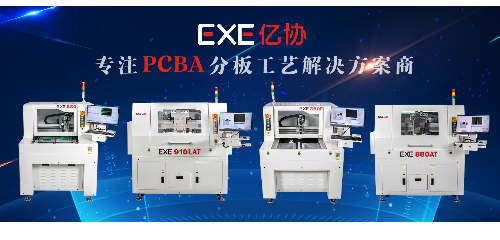
In the fast - paced landscape of the Industry 4.0 revolution, characterized by the convergence of digital technologies and traditional manufacturing, the PCB (Printed Circuit Board) router machine, a cornerstone of electronics manufacturing, is undergoing significant innovation and upgrade. This transformation is not only driven by the need to meet the ever - increasing demands for high - precision, high - speed, and complex PCB production but also by the imperatives of integrating into smart manufacturing ecosystems.
I. Smart Connectivity and Data - Driven Operations
A. Internet of Things (IoT) Integration
Real - Time Monitoring
PCB router machines are now being equipped with IoT sensors. These sensors can monitor various parameters such as spindle speed, tool wear, temperature, and vibration in real - time. For example, sensors attached to the spindle can detect any deviation in rotational speed, which could indicate a problem with the motor or a potential tool breakage. By constantly streaming this data to a central server or the cloud, manufacturers can proactively identify and address issues before they lead to production delays or defective PCBs.
Remote Control and Management
Through IoT connectivity, operators can remotely control the PCB router machine. They can start or stop the machine, adjust machining parameters, and even load new job files from anywhere with an internet connection. This is particularly useful in large - scale manufacturing facilities where multiple machines are located across different floors or in different geographical locations. For instance, a technician in a headquarters can remotely troubleshoot and adjust the settings of a PCB router machine in a factory located in another country, reducing downtime and improving operational efficiency.
B. Big Data Analytics
Process Optimization
The vast amount of data collected from IoT sensors on PCB router machines can be analyzed using big data analytics tools. By analyzing historical data on machining processes, manufacturers can identify patterns and correlations. For example, data analysis might reveal that a certain combination of spindle speed, feed rate, and cutting depth results in the best quality PCB cuts with the least amount of tool wear. Based on these insights, manufacturers can optimize their machining processes, leading to improved product quality, reduced material waste, and longer tool life.
Predictive Maintenance
Big data analytics enables predictive maintenance of PCB router machines. By analyzing trends in sensor data, such as the rate of tool wear over time or the frequency of vibration spikes, manufacturers can predict when a machine component is likely to fail. For example, if the data shows that the tool wear rate is increasing steadily and is approaching a critical level, the maintenance team can schedule a tool replacement before it breaks during production. This not only prevents costly unplanned downtime but also extends the overall lifespan of the machine.