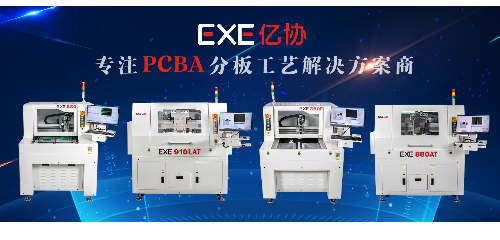
In - depth Analysis of PCB Router Machine: Unlocking the Processing Secrets from Working Principle to Core Structure
In the realm of modern electronics manufacturing, Printed Circuit Boards (PCBs) are the backbone that interconnects various electronic components. The PCB router machine plays a pivotal role in shaping these boards with high precision, and a comprehensive understanding of its working principle and core structure is crucial for optimizing its performance and achieving superior PCB manufacturing results.
I. Working Principle of PCB Router Machine
Material Removal Basics
At its core, a PCB router machine operates on the principle of material removal. It uses a rotating cutting tool, typically a high - speed router bit, to precisely cut, drill, and mill the PCB substrate. The substrate, which is often made of materials like fiberglass - reinforced epoxy resin (FR - 4), needs to be shaped accurately to create the desired circuit patterns, holes for component insertion, and board outlines.
The router bit rotates at extremely high speeds, usually ranging from 10,000 to 60,000 revolutions per minute (RPM). This high - speed rotation, combined with the controlled movement of the PCB under the bit, enables the removal of material in a highly precise manner. For example, when creating fine - line traces on the PCB, the router bit carefully etches away the unwanted copper layers on the surface of the substrate, following the pre - programmed design patterns.
Computer - Aided Control
Most contemporary PCB router machines are computer - controlled, relying on Computer - Aided Manufacturing (CAM) software. The design of the PCB, created in a Computer - Aided Design (CAD) environment, is translated into a set of instructions that the router machine can understand. The CAM software analyzes the CAD file, generating tool paths for the router bit.
These tool paths are then sent to the machine's controller, which is responsible for precisely guiding the movement of the router bit in multiple axes. Modern PCB router machines commonly feature three - axis (X, Y, and Z) or even five - axis control. The X and Y axes control the horizontal movement of the router bit over the surface of the PCB, while the Z - axis controls the vertical movement, allowing for operations such as drilling holes of varying depths. For instance, when drilling vias (holes that connect different layers of a multi - layer PCB), the Z - axis control ensures that the drill bit penetrates the correct number of layers with the appropriate depth.
II. Core Structure of PCB Router Machine
Mechanical Framework
The mechanical framework of a PCB router machine is designed to provide stability and precision during operation. It typically consists of a rigid base, often made of high - grade cast iron or heavy - duty aluminum alloy. The base serves as the foundation for all other components and is engineered to minimize vibrations that could affect the accuracy of the cutting process.
The linear motion systems, which include guide rails and ball screws, are crucial for the smooth and precise movement of the router bit. High - quality guide rails ensure that the router bit moves in a straight line without any lateral play. Ball screws, on the other hand, convert the rotational motion of the motors into linear motion with high precision. For example, in a high - end PCB router machine, the guide rails may have a precision of up to 0.001 mm, allowing for extremely accurate positioning of the router bit.
Spindle Assembly
The spindle assembly is the heart of the PCB router machine as it houses the router bit and provides the high - speed rotation necessary for material removal. The spindle motor is a high - performance, low - vibration motor that can achieve the required RPM. It is often equipped with a cooling system, such as forced - air or liquid cooling, to prevent overheating during continuous operation.
The spindle also has a collet system that securely holds the router bit in place. Different types of router bits, such as flat - end mills for general cutting, drill bits for creating holes, and engraving bits for fine - detail work, can be easily installed and removed from the collet. The spindle's ability to maintain a consistent rotational speed and stability is essential for achieving uniform and accurate cuts on the PCB.
Control System
The control system of a PCB router machine coordinates all the operations of the machine. It includes a motion controller, which interprets the tool paths generated by the CAM software and sends signals to the motors that drive the linear motion systems. The motion controller also ensures that the movements of the different axes are synchronized accurately.
Additionally, the control system has sensors to monitor various parameters such as the position of the router bit, the speed of the spindle, and the temperature of the machine components. These sensors provide feedback to the controller, allowing it to make real - time adjustments to ensure optimal performance. For example, if the spindle speed starts to drop due to excessive load, the control system can increase the power to the spindle motor to maintain the desired RPM.
In conclusion, understanding the working principle and core structure of a PCB router machine is essential for electronics manufacturers. By grasping these fundamental aspects, manufacturers can optimize the performance of their PCB router machines, improve the quality of PCB production, and stay competitive in the fast - paced electronics manufacturing industry.