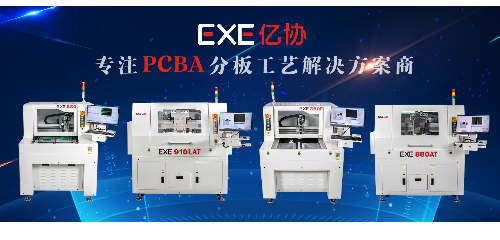
In the fast - paced world of electronics manufacturing, printed circuit boards (PCBs) serve as the backbone of countless devices, from smartphones and laptops to complex industrial control systems. The ability to produce high - quality, intricate PCBs is crucial for the functionality and miniaturization of these electronics. This is where the PCB router machine comes into play, a sophisticated piece of equipment that has revolutionized the process of carving circuit boards with pinpoint precision.
Understanding the Basics of PCB Router Machines
A PCB router machine is a computer - numerically - controlled (CNC) device specifically designed for PCB fabrication. It uses rotary cutting tools, such as end mills, to remove unwanted material from a PCB substrate, typically made of fiberglass - reinforced epoxy resin or other composite materials. The machine is guided by a set of instructions, usually in the form of a Gerber file, which contains detailed information about the PCB layout, including the location of traces, pads, holes, and other features.
The core components of a PCB router machine include a high - speed spindle that rotates the cutting tool, a precision - guided motion system for moving the cutting tool in multiple axes (usually X, Y, and Z), and a control unit that interprets the Gerber file and coordinates the movement of the spindle and axes. These components work in harmony to execute the precise cutting operations required to create a functional PCB.
Precision - Ensuring Mechanisms
High - Precision Spindle
The spindle of a PCB router machine is a critical component for achieving precision. High - quality machines are equipped with spindles that can reach extremely high rotational speeds, often ranging from 20,000 to 100,000 revolutions per minute (RPM). The high - speed rotation of the cutting tool allows for clean and accurate cuts. For example, when cutting fine traces on a high - density interconnect (HDI) PCB, a spindle running at a high RPM can ensure that the edges of the traces are smooth and free from burrs.
Moreover, the spindle's stability is equally important. Advanced spindles are designed with precision bearings and a rigid housing to minimize vibration during operation. Vibration can cause the cutting tool to deviate from its intended path, resulting in inaccurate cuts. By reducing vibration, the spindle enables the cutting tool to maintain a consistent and precise cutting action, which is essential for producing high - quality PCBs with tight tolerances.
Motion Control System
The motion control system of a PCB router machine is responsible for moving the cutting tool with micron - level accuracy. Most modern machines use linear guides and ball screws in the X, Y, and Z axes. Linear guides provide smooth and precise linear motion, while ball screws convert rotary motion into linear motion with high efficiency and accuracy.
Closed - loop control systems are often employed in high - end PCB router machines. These systems use feedback sensors, such as encoders, to continuously monitor the position of the cutting tool. If there is any deviation from the programmed path, the control unit can quickly adjust the motor speeds to correct the position. This closed - loop feedback mechanism ensures that the cutting tool follows the exact trajectory specified in the Gerber file, even in the presence of external disturbances, such as mechanical vibrations or temperature variations.
Tool Selection and Management
The choice of cutting tool is another crucial factor in achieving precision in PCB routing. Different types of end mills are available, each designed for specific applications. For cutting fine traces and small holes, micro - end mills with diameters as small as 0.1 mm or even smaller are used. These micro - end mills are made from high - speed steel or carbide, which offer excellent wear resistance and cutting performance.
In addition to tool selection, proper tool management is essential. PCB router machines often have tool changers that can automatically switch between different cutting tools as required by the PCB layout. This allows for the efficient completion of multiple operations, such as cutting traces, drilling holes, and milling slots, without the need for manual tool changes. Moreover, tool wear monitoring systems can detect when a cutting tool is becoming worn and needs to be replaced. This helps to maintain the accuracy of the cutting process, as a worn - out tool can cause cuts to be wider or less precise.
Handling Complex PCB Layouts
Multilayer PCB Processing
Modern PCBs often consist of multiple layers, which increases their complexity and functionality. PCB router machines are equipped to handle the challenges of processing multilayer PCBs. When routing a multilayer PCB, the machine needs to precisely align the cutting operations on each layer to ensure that the electrical connections between the layers are correct.
Advanced PCB router machines use alignment systems, such as fiducial markers, to achieve accurate layer - to - layer alignment. Fiducial markers are small, precisely placed targets on the PCB substrate. The machine's vision system can detect these markers and use them as reference points to align the cutting operations on each layer. This ensures that the holes, traces, and other features on different layers are properly aligned, enabling the creation of reliable electrical connections between the layers.