In the intricate world of electronics manufacturing, Printed Circuit Boards (PCBs) are the backbone that holds together the complex web of electronic components. Once PCBs are fabricated in large panels, a crucial step in the production process is separating them into individual boards. This is where PCB depaneling machines come into play, and embarking on an exploration of these machines reveals a fascinating realm of precision, efficiency, and innovation.
The Basics: Understanding PCB Depaneling
Before delving into the machines themselves, it's essential to understand the concept of PCB depaneling. In modern electronics manufacturing, PCBs are often produced in large panels to optimize production efficiency. These panels contain multiple identical or different circuit boards interconnected by thin tabs or break - away links. Depaneling is the process of separating these individual boards from the panel, ensuring that each board is in a usable state without causing damage to the delicate circuitry.
Types of PCB Depaneling Machines
Manual Depaneling Tools
At the most basic level, there are manual depaneling tools. These include simple devices like hand - held guillotines and scoring knives. A hand - held guillotine is a manually operated cutting tool that uses a sharp blade to cut through the tabs connecting the PCBs. It is relatively inexpensive and suitable for small - scale production or prototyping where the volume of boards to be separated is low. However, it requires a high level of operator skill to ensure a clean and accurate cut, and the process can be time - consuming. Scoring knives, on the other hand, are used to score the break - away links on the PCB panel, which can then be snapped apart. This method also demands careful handling to avoid damaging the boards.
Semi - Automatic Depaneling Machines
Semi - automatic depaneling machines offer an upgrade from manual tools. These machines typically have a cutting or routing mechanism that is controlled by the operator. For example, a semi - automatic milling machine used for depaneling has a motor - driven cutting tool. The operator positions the PCB panel on the machine's worktable and guides the cutting tool along the separation lines. This type of machine provides more precision compared to manual tools and can handle a higher volume of boards. It also reduces the physical strain on the operator as the cutting process is powered. However, the operator still needs to be actively involved in the process, which may limit the speed of production.
Fully Automatic Depaneling Machines
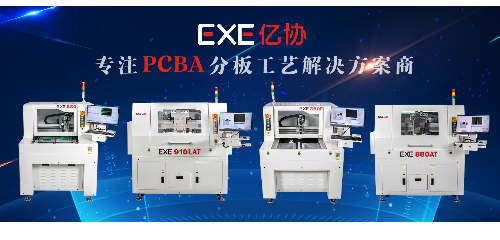
Fully automatic depaneling machines represent the pinnacle of depaneling technology. These machines are equipped with advanced features such as computer - controlled cutting paths, high - speed spindles, and automated board handling systems. A common type is the fully automatic router - type depaneling machine. It uses a high - speed rotating router bit to precisely cut along the pre - programmed separation lines on the PCB panel. The machine can quickly and accurately process a large number of boards without human intervention. Some fully automatic depaneling machines are also integrated with vision systems. These vision systems can detect the exact position and orientation of the PCB panel, compensating for any minor variations in the panel's manufacturing. This ensures that the cutting process is even more precise, reducing the risk of damaging the boards.
The Allure of Precision
One of the most captivating aspects of PCB depaneling machines is their ability to achieve a high level of precision. In electronics manufacturing, even the slightest deviation during the depaneling process can cause damage to the PCB's circuitry, leading to defective boards. Depaneling machines, especially the fully automatic ones, are designed to cut or separate the boards with micron - level accuracy. For example, in the production of high - end medical devices or aerospace electronics, where the PCBs are extremely complex and sensitive, the precision of the depaneling machine is crucial. A well - calibrated automatic router can cut through the tabs connecting the boards with an accuracy of ±0.05 mm, ensuring that the individual PCBs are free from any mechanical stress or damage. This precision not only improves the quality of the final product but also reduces the waste of valuable materials, as fewer boards are rejected due to depaneling - related defects.
Efficiency and Productivity Gains
PCB depaneling machines significantly enhance the efficiency and productivity of the electronics manufacturing process. Manual depaneling methods are labor - intensive and time - consuming. A skilled operator may be able to separate only a limited number of boards in an hour. In contrast, a fully automatic depaneling machine can process hundreds of boards per hour. For a large - scale electronics manufacturing plant that produces thousands of PCBs daily, the use of automatic depaneling machines can reduce the production time by several hours. This increased productivity allows manufacturers to meet tight deadlines, increase their output, and ultimately, improve their competitiveness in the market. Moreover, the consistent performance of the machines means that the quality of the depaneled boards is more uniform, further streamlining the production process.
Innovation in Depaneling Technology
The world of PCB depaneling machines is constantly evolving, with ongoing innovation aimed at improving performance. One area of innovation is in the development of new cutting technologies. For example, laser - based depaneling machines are emerging as a promising alternative. These machines use a high - energy laser beam to precisely cut through the PCB panel. Laser depaneling offers several advantages, including the ability to cut complex shapes with high precision and minimal heat - affected zones. This is particularly beneficial for PCBs with delicate components or fine - pitch traces. Another area of innovation is in the integration of Industry 4.0 concepts into depaneling machines. Some modern depaneling machines are connected to the factory's network, allowing for real - time monitoring of the machine's performance, production data collection, and remote control. This connectivity enables better production planning, predictive maintenance, and overall optimization of the manufacturing process.
Embarking on an exploration of PCB depaneling machines reveals a world filled with technological marvels. From the basic manual tools to the highly advanced fully automatic machines, each type plays a role in the electronics manufacturing process. The allure of precision, efficiency, and innovation makes PCB depaneling machines an essential part of the modern electronics industry, enabling the production of high - quality PCBs at scale. As technology continues to advance, these machines will undoubtedly play an even more significant role in shaping the future of electronics manufacturing.