In the fast - paced world of electronics manufacturing, the Printed Circuit Board (PCB) is the backbone of countless devices, from smartphones to industrial control systems. One crucial step in PCB production is depaneling, the process of separating individual PCBs from a larger panel. Over the years, the evolution from manual to automated PCB depaneling machines has brought about a revolutionary transformation in the industry, significantly enhancing efficiency, quality, and cost - effectiveness.
The Era of Manual Depaneling: Challenges and Limitations
Labor - Intensive and Time - Consuming Process
Manual depaneling, which was the norm in the early days of PCB manufacturing, relied heavily on human operators. Workers would use basic tools such as guillotines, saws, or even scissors to cut the individual PCBs from the panel. This method was extremely labor - intensive. For example, in a small - scale electronics workshop, an operator might spend several minutes carefully cutting each PCB, especially when dealing with complex panel designs. As a result, the production speed was severely limited. In a day, an operator could only process a relatively small number of PCB panels, which was far from meeting the growing demands of the market.
Inconsistent Quality and High Error Rates
Human - operated depaneling was also plagued by inconsistent quality. The skill level and physical condition of the operator had a significant impact on the cutting results. Even experienced workers might produce uneven cuts, chipped edges, or damaged components on the PCBs due to factors like fatigue, lack of concentration, or improper tool use. These quality issues not only led to a high rejection rate of finished products but also increased the cost of rework and waste. In some cases, a single defective cut could render an entire PCB unusable, resulting in a loss of both materials and production time.
Safety Risks for Operators
Manual depaneling using sharp tools also posed safety risks to the operators. Accidents such as cuts, bruises, or even more serious injuries were not uncommon. Workers had to be constantly vigilant while operating the tools, which added to their mental stress and further affected their work efficiency.
The Rise of Automated PCB Depaneling Machines: A Paradigm Shift
Precision and Consistency
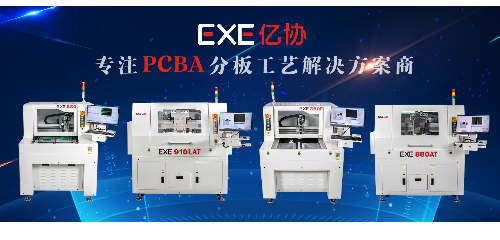
Automated PCB depaneling machines are designed with advanced precision - control technologies. Most modern machines use high - accuracy servo motors and linear guides to ensure that the cutting path is followed with micron - level precision. For instance, laser - based depaneling machines can vaporize the PCB material along the cutting line with extreme accuracy, producing smooth and burr - free edges. This level of precision guarantees that each separated PCB meets the strictest quality standards. Whether it's a high - volume production run or a small - batch manufacturing of specialized PCBs, the automated machine can consistently deliver products with uniform quality, reducing the rejection rate to a minimum.
High - Speed Production
Automation has significantly increased the depaneling speed. Automated machines can operate continuously at a much faster pace than human operators. Some high - end depaneling machines are capable of processing dozens of PCB panels per hour, depending on the panel size and complexity. In a large - scale electronics manufacturing factory, these machines can handle the high - volume production demands efficiently, enabling the factory to meet tight production schedules and quickly respond to market needs.
Enhanced Safety and Reduced Labor Costs
With automated depaneling machines, the safety risks associated with manual operation are eliminated. Operators no longer need to handle sharp tools directly. Instead, they can monitor and manage the depaneling process from a safe distance, usually through a control panel. This not only improves the working environment but also reduces the need for a large number of manual laborers. Fewer workers are required to operate the machines, which leads to a significant reduction in labor costs. The cost savings can be reinvested in other aspects of the production process, such as research and development or upgrading production equipment.