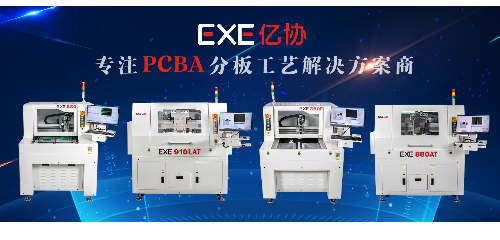
In the intricate world of printed circuit board (PCB) manufacturing, the process of separating individual boards from a panel is a crucial step. Selecting the appropriate PCB depaneling machine can significantly impact the quality of the end - product, production efficiency, and overall costs. With a variety of depaneling technologies and machine types available, making an informed decision requires a comprehensive understanding of your production requirements.
Production Volume Considerations
High - Volume Production
For manufacturers with large - scale production demands, efficiency is key. Mechanical V - cut depaneling machines are often a popular choice. These machines can quickly separate PCBs along pre - cut V - grooves in the panel. Their high - speed operation and relatively simple design allow for continuous production runs. For example, in a factory that produces thousands of PCBs for consumer electronics daily, a mechanical V - cut depaneling machine can keep up with the high throughput requirements. The blades used in these machines can be easily replaced, minimizing downtime.
Die - cutting depaneling machines are also well - suited for high - volume production of PCBs with regular shapes. Once the customized die is created, the process of punching out individual boards from the panel is extremely fast. This makes it an ideal option for mass - producing PCBs for applications like simple household appliances or basic electronic devices where the PCB design is standardized.
Low - Volume or Prototyping
When dealing with low - volume production or prototyping, flexibility and precision are more important than speed. Laser depaneling machines offer the advantage of high precision. They can cut PCBs with complex shapes and fine - pitch components without causing mechanical stress. This is crucial for prototype PCBs, which often have unique designs and require careful handling. Although laser depaneling may be slower compared to other methods, the ability to quickly adapt to different PCB designs without the need for extensive tooling changes makes it a valuable choice for small - scale production.
PCB Design and Complexity
Simple and Regular Shapes
PCBs with simple and regular shapes, such as rectangular boards with a standard layout, can be efficiently processed using mechanical V - cut or die - cutting depaneling machines. Mechanical V - cut machines are cost - effective and can handle a wide range of panel sizes with pre - cut V - grooves. Die - cutting, on the other hand, provides a very clean and precise cut for these straightforward designs. For example, in the production of PCBs for power supplies, which typically have a simple rectangular shape, both mechanical V - cut and die - cutting machines can achieve high - quality results at a relatively low cost.
Complex and Irregular Shapes
For PCBs with complex and irregular shapes, laser depaneling is often the best option. The laser beam can follow intricate patterns with micron - level precision. This is especially important for PCBs used in high - end electronics like smartphones or medical devices, where the board may have cut - outs for components, curved edges, or a non - standard layout. Laser depaneling machines can create smooth, burr - free edges, ensuring the integrity of the PCB and its components.
Quality Requirements
High - Reliability Applications
In applications where high reliability is a must, such as aerospace, military, or medical devices, the quality of the depaneling process is of utmost importance. Laser depaneling is the preferred choice in these cases. The absence of mechanical stress during the cutting process reduces the risk of damaging delicate components on the PCB. Additionally, the smooth cut edges produced by laser depaneling minimize the potential for micro - cracks or burrs that could lead to long - term reliability issues.
General - Purpose Applications
For general - purpose applications, such as consumer electronics or industrial control systems, a balance between quality and cost is often sought. Mechanical V - cut depaneling machines can provide acceptable quality levels at a lower cost. However, if the quality requirements are slightly higher, and the budget allows, a combination of mechanical V - cut with post - processing techniques like edge - deburring may be considered. This can improve the edge quality of the separated PCBs without the high cost of a laser - based solution.
Cost - Benefit Analysis
Initial Investment
The initial investment in a PCB depaneling machine can vary widely. Mechanical V - cut depaneling machines are generally the most affordable, followed by die - cutting machines. Laser depaneling machines, on the other hand, require a significant upfront investment. However, it's important to consider the long - term cost - benefit. For high - volume production, the cost per unit of using a more expensive laser depaneling machine may be offset by the reduced need for rework due to its high - quality output.
Operating Costs
Operating costs include factors such as energy consumption, consumable replacement (e.g., blades for mechanical V - cut machines, laser sources for laser depaneling machines), and maintenance. Mechanical V - cut machines have relatively low energy consumption and inexpensive consumables. Laser depaneling machines, while offering high - quality cuts, consume more energy and have more expensive consumables. Die - cutting machines have lower energy requirements, but the cost of die - making and die - maintenance should be factored in.
Rework and Scrap Costs
The quality of the depaneling process directly impacts rework and scrap costs. A machine that produces a high - quality cut with minimal burrs and no damage to the PCB reduces the need for rework. For example, if a mechanical V - cut machine produces a significant number of boards with burrs that need to be removed manually, the cost of labor for rework can add up. In contrast, a laser depaneling machine may have a higher initial and operating cost, but if it reduces rework and scrap rates significantly, it can be more cost - effective in the long run.
Selecting the right PCB depaneling machine for your production needs is a multi - faceted decision. By carefully considering factors such as production volume, PCB design complexity, quality requirements, and cost - benefit analysis, manufacturers can ensure that they invest in a machine that optimizes their production process, enhances product quality, and maximizes profitability.