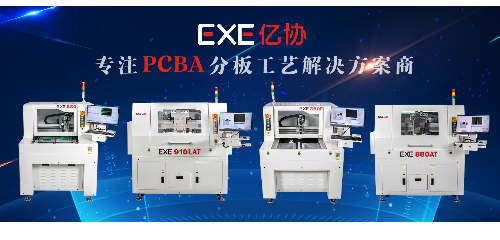
In the realm of printed circuit board (PCB) manufacturing, the process of separating individual boards from a panel is crucial. PCB depaneling machines, equipped with various depaneling technologies, play a pivotal role in this stage. Different depaneling technologies have distinct impacts on the quality of the separated PCBs, production efficiency, and overall manufacturing costs. This article delves into the diverse effects of these technologies.
1. Mechanical V - Cut Depaneling Technology
1.1 Quality Impact
Mechanical V - cut depaneling is one of the most commonly used methods. A V - shaped groove is pre - cut along the separation lines of the PCB panel during the manufacturing process. When using a mechanical V - cut depaneling machine, a blade follows the V - groove to separate the boards. This technology generally provides a relatively clean cut edge. However, there is a risk of generating small burrs or micro - cracks along the cut line. These imperfections might not be immediately visible but could potentially affect the long - term reliability of the PCB, especially in high - vibration or high - stress applications. For example, in automotive electronics where PCBs are exposed to constant vibrations, even minor micro - cracks could lead to intermittent electrical failures over time.
1.2 Efficiency Impact
In terms of production efficiency, mechanical V - cut depaneling can be quite fast. The process is relatively straightforward, and with proper setup, high - volume production is achievable. The machines can be adjusted to handle different panel sizes and V - cut depths, allowing for flexibility in production. For instance, in a consumer electronics manufacturing plant that produces large quantities of mobile phone PCBs, a well - tuned mechanical V - cut depaneling machine can quickly separate thousands of boards per day, keeping up with the high - demand production schedule.
1.3 Cost Impact
From a cost perspective, mechanical V - cut depaneling machines are relatively affordable compared to some advanced depaneling technologies. The equipment is less complex, and the consumables, such as the cutting blades, are generally inexpensive and readily available. This makes it an attractive option for small - to medium - sized PCB manufacturing companies with budget constraints. However, the cost of rework due to potential burrs or micro - cracks should be factored in. If a significant number of boards need to be reworked to meet quality standards, the overall cost can increase.
2. Laser Depaneling Technology
2.1 Quality Impact
Laser depaneling technology offers a high - precision alternative. Using a focused laser beam, the PCB panel is cut with extreme accuracy. This results in a smooth, burr - free cut edge with minimal mechanical stress on the board. The laser can precisely follow complex separation patterns, making it ideal for PCBs with irregular shapes or fine - pitch components. In the aerospace industry, where PCBs must meet stringent quality and reliability requirements, laser depaneling is often preferred. The absence of mechanical stress ensures that the delicate electronic components on the PCB are not damaged during the depaneling process, reducing the risk of component failure.
2.2 Efficiency Impact
The efficiency of laser depaneling depends on various factors, such as the power of the laser, the thickness of the PCB, and the complexity of the cut. While laser cutting is highly accurate, it can be relatively slow compared to mechanical methods for large - scale, simple - shaped PCB panels. However, for PCBs with intricate designs or when high - quality cuts are a top priority, the slower speed may be acceptable. For example, in the production of high - end medical device PCBs, where precision is crucial, the time taken for laser depaneling is considered a worthwhile trade - off for the superior quality of the separated boards.
2.3 Cost Impact
Laser depaneling machines are more expensive to purchase and operate compared to mechanical counterparts. The initial investment in laser equipment is substantial, and the cost of maintaining the laser source, optics, and other components can be high. Additionally, the energy consumption of laser machines is relatively significant. However, due to the high - quality output and reduced need for rework, the long - term cost per good - quality PCB may be competitive in certain applications. For companies that can afford the upfront investment and prioritize quality over high - volume, low - cost production in the short - term, laser depaneling can be a cost - effective solution.
3. Die - Cutting Depaneling Technology
3.1 Quality Impact
Die - cutting depaneling involves using a customized die to punch out individual PCBs from the panel. This technology can provide very clean and precise cuts, especially for PCBs with simple and regular shapes. The die is designed to fit the exact shape of the PCB, ensuring a perfect separation. Similar to laser depaneling, it can minimize the risk of burrs and mechanical stress on the board. However, if the die is not properly maintained or designed, it can cause damage to the PCB, such as deformation or cracking at the edges. In the manufacturing of PCBs for household appliances, die - cutting can be an effective method when the PCB shape is relatively straightforward, and high - volume production is required.
3.2 Efficiency Impact
Die - cutting is a high - speed depaneling method when used for appropriate PCB designs. Once the die is prepared and installed in the machine, the process of separating boards can be extremely fast. It is well - suited for mass production scenarios where large quantities of identical PCBs need to be depaneled. For example, in a factory that manufactures PCBs for low - cost consumer electronics like chargers or simple remote controls, die - cutting can significantly increase production throughput.
3.3 Cost Impact
The cost of die - cutting depaneling is mainly associated with the initial die - making process. Custom - made dies can be expensive, especially for complex PCB shapes. However, for high - volume production runs, the cost per unit can be reduced significantly as the die can be reused thousands of times. Additionally, the die - cutting machine itself may not be as costly as some advanced laser - based depaneling equipment. But like mechanical V - cut depaneling, any potential damage to the PCB due to die - related issues may increase the overall cost due to rework.
In conclusion, different depaneling technologies in PCB depaneling machines have far - reaching impacts on quality, efficiency, and cost. PCB manufacturers need to carefully evaluate their specific requirements, considering factors such as the type of PCBs being produced, production volume, quality standards, and budget constraints, before choosing the most suitable depaneling technology for their operations. As the electronics industry continues to evolve, with demands for smaller, more complex PCBs, the development and selection of depaneling technologies will remain a critical aspect of PCB manufacturing.