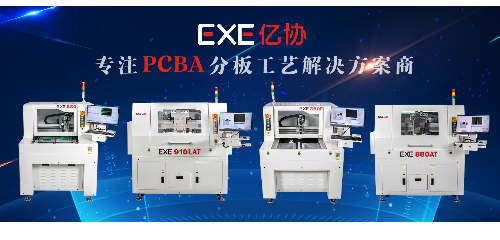
As electronics manufacturing moves toward smaller, thinner, and higher-density PCBs, traditional PCB depaneling methods can no longer meet modern production demands. The future of PCB depaneling is clearly defined by three core directions: full automation, intelligent control, and ultra-high efficiency. These innovations are reshaping SMT production lines, reducing stress on boards, lowering defect rates, and supporting the flexible manufacturing needs of 5G, automotive, consumer electronics, and medical devices.
1. Full Automation for Unmanned Production Lines
Automation is the foundation of next-generation PCB depaneling equipment.
Integrated with online SMT lines, including conveyors, robots, and testing equipment
Automatic loading, positioning, cutting, and unloading without manual operation
Supports continuous mass production and greatly reduces labor costs
Reduces human error and ensures consistent cutting quality
Fully automatic PCB depaneling machines are becoming standard in smart factories, enabling 24-hour unmanned production.
2. Intelligent Control and Digital Monitoring
Intelligence upgrades depaneling from mechanical action to data-driven management.
High-precision visual positioning systems for automatic PCB alignment
AI-powered parameter adjustment for different board thickness and materials
Real-time monitoring of cutting force, speed, and tool wear
Automatic fault alarm and self-diagnosis functions
Data collection and cloud upload for production traceability
Intelligent systems help manufacturers achieve higher precision and better process control.
3. Higher Efficiency and Lower Defect Rates
Modern depaneling machines focus on both speed and quality.
Higher cutting speed with shorter cycle times
Optimized motion control for smoother routing and laser cutting
Minimal mechanical stress to prevent PCB damage, cracks, or component failure
Compatible with flexible PCBs, high-density boards, and fragile substrates
High-efficiency depaneling directly improves yield and reduces production waste.
4. Advanced Depaneling Technologies: Laser & Router
The future is dominated by two high-precision technologies:
Laser PCB Depaneling: Non-contact cutting, no stress, no dust, ideal for micro and delicate boards
High-Speed Router Depaneling: Strong versatility, cost-effective, suitable for various batch production
Both technologies are continuously upgraded for faster, cleaner, and more stable performance.
5. Eco-Friendly and Safe Design
Sustainability and safety are increasingly important in modern equipment.
Low vibration, low noise, and dust-free operation
Environmentally friendly materials and energy-saving motors
Fully enclosed safety structures to protect operators
Compliance with international industrial safety standards
6. Flexibility for Multi-Variety, Small-Batch Production
Modern electronics factories require quick product changes.
Quick program switching for different PCB types
Compact structure for easy line rearrangement
Adaptable to various shapes, including irregular and multi-piece panels
Flexible depaneling solutions support customized and intelligent manufacturing.
Conclusion
The future of PCB depaneling is moving rapidly toward automation, intelligence, and high efficiency. With the rapid development of the electronics industry, depaneling machines are no longer just separating tools—they are key components of smart, digital, and efficient SMT production lines. For manufacturers, investing in advanced PCB depaneling technology means higher productivity, better quality, and stronger competitiveness in the global market.