Technical Overview of PCB Depaneling Machines: Blade Cutting vs. Laser Scribing for High-Precision Board Separation
In the electronics manufacturing industry, printed circuit board (PCB) depaneling—the process of separating individual boards from panelized arrays—is critical for ensuring dimensional accuracy, minimizing thermal stress, and maintaining electrical integrity. Two dominant technologies, blade cutting and laser scribing, offer distinct advantages in high-precision applications. This article provides a technical comparison of these methods, exploring their principles, performance metrics, and suitability for advanced PCB designs.
Core Principles and Mechanical Designs
1. Blade Cutting Machines
Working Mechanism
Rotary Blade Cutting:
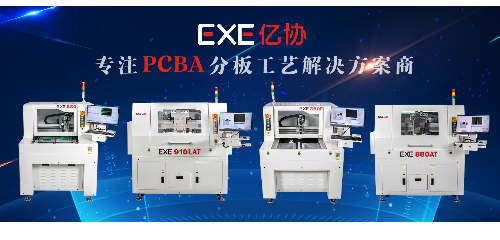
Employs high-speed rotating blades (diameters 30–100 mm, speeds 15,000–60,000 RPM) made of tungsten carbide or diamond-coated steel.
The blade shears through the PCB substrate (e.g., FR-4, Rogers RT/duroid) along pre-defined routes, typically following v-scores or routing channels.
Fixed Blade Cutting:
Uses stationary blades with a guillotine-like motion, suitable for simple rectangular boards but limited in complexity.
Key Components
Spindle System:
Precision air bearings or magnetic levitation spindles reduce vibration (amplitude<5 μm) and ensure cut widths as narrow as 0.3 mm.
Vacuum Fixturing:
Holds the PCB panel securely to prevent movement during cutting, with pressure control (50–100 kPa) to avoid substrate deformation.
2. Laser Scribing Machines
Working Mechanism
CO₂ Laser Scribing:
Emits 10.6 μm wavelength light to ablate the PCB substrate, vaporizing material along the separation line. Ideal for organic materials like FR-4 and polyimide.
UV Laser Scribing:
Uses shorter wavelengths (355 nm) for precise ablation of thin films and sensitive components, minimizing heat-affected zones (HAZ<50 μm).
Fiber Laser Scribing:
Employs 1.06 μm wavelength for metal-based PCBs (e.g., aluminum nitride), offering high energy density for rapid material removal.
Key Components
Galvanometric Scanning System:
Directs the laser beam with mirror galvanometers, achieving positioning accuracy of ±10 μm and scan speeds up to 500 mm/s.
Cooling System:
Integrates cold air (–5°C) or water chillers to maintain laser module stability and prevent overheating during prolonged operation.
Performance Comparison for High-Precision Applications
Metric
Blade Cutting
Laser Scribing
Cutting Speed
50–200 mm/s (dependent on material thickness)
100–500 mm/s (non-contact, faster for complex shapes)
Minimum Feature Size
0.3 mm (limited by blade diameter)
0.1 mm (limited by laser spot size)
Edge Quality
Smooth with minimal burrs (burr height<50 μm)
Ultra-smooth, burr-free edges
Thermal Stress
Low (mechanical cutting, ΔT<50°C)
Moderate (CO₂ laser ΔT 80–120°C; UV laser ΔT<30°C)
Material Compatibility
FR-4, CEM-3, metal-core PCBs
FR-4, polyimide, ceramic, flexible PCBs
Tooling Costs
High (blades require frequent replacement, $50–$200 per blade)
Low (no physical tooling, laser module lifespan >10,000 hours)
1. Dimensional Accuracy
Blade Cutting:
Achieves positional accuracy of ±50 μm for rigid PCBs, but tolerance degrades to ±100 μm for flexible or thin substrates (<0.5 mm) due to material deflection.
Laser Scribing:
Maintains ±10 μm accuracy for all substrate types, critical for high-density interconnect (HDI) boards with microvias (<100 μm) and fine-pitch components.
2. Thermal and Mechanical Stress
Blade Cutting:
Induces mechanical stress, potentially causing microcracks in brittle materials (e.g., ceramic substrates). Vibration analysis shows peak acceleration of 50–100 g during cutting.
Laser Scribing:
Minimizes mechanical stress, with UV lasers reducing thermal stress by 70% compared to CO₂ lasers. Ideal for PCBs with temperature-sensitive components (e.g., MEMS devices).
3. Environmental Impact
Blade Cutting:
Generates particulate waste (10–20 mg/cm²) and requires dust extraction systems (filtration efficiency ≥99.97% for 0.3 μm particles).
Laser Scribing:
Produces volatile organic compounds (VOCs) from substrate ablation, necessitating exhaust systems with activated carbon filters.