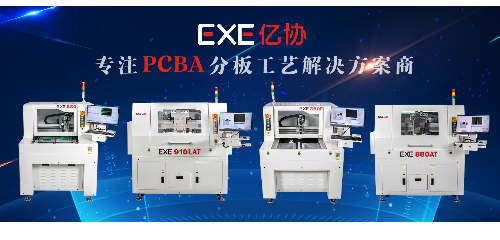
PCB Router Machine: The "Precision Wizard" in Circuit Board Processing, How Astounding?
n the intricate realm of electronics manufacturing, printed circuit boards (PCBs) serve as the lifeblood, connecting and powering countless electronic devices. At the heart of PCB production lies the PCB router machine, a remarkable piece of equipment that has earned the moniker of the "precision wizard" in circuit board processing. But just how astounding are its capabilities, and what makes it an indispensable asset in the electronics industry?
I. Unparalleled Precision in PCB Fabrication
A. Micron - Level Accuracy
The PCB router machine is engineered to achieve an astonishing level of precision, often operating at the micron scale. In the production of high - end PCBs for smartphones, tablets, and other portable devices, the router must create minute traces and holes with extreme accuracy. For instance, it can drill holes as small as 0.1mm in diameter with a tolerance of ±0.01mm. This micron - level precision ensures that the components mounted on the PCB can communicate flawlessly, minimizing the risk of electrical failures due to misaligned connections.
The router's precision is achieved through a combination of advanced hardware and software technologies. High - resolution motion control systems, such as linear motors and precision ball screws, enable the router to move the cutting tool with utmost accuracy. Additionally, sophisticated computer - numerical - control (CNC) software precisely calculates the tool's path based on the PCB design file, ensuring that every cut and drill is executed with pinpoint precision.
B. Consistency Across Production Runs
In large - scale PCB manufacturing, consistency is key. The PCB router machine excels in this aspect, delivering uniform results across thousands of production runs. Whether it's the first PCB off the production line or the thousandth, the router can maintain the same high level of precision. This consistency is crucial for ensuring the quality and reliability of electronic products.
For example, in the production of PCBs for automotive electronics, where strict quality standards must be met, the PCB router machine's consistent performance ensures that every PCB functions as intended. This reduces the need for costly rework and testing, improving overall production efficiency and reducing waste.
II. High - Speed Processing for Increased Productivity
A. Rapid Material Removal
Time is of the essence in the electronics industry, and the PCB router machine is designed to process PCBs at high speeds. High - power spindles and efficient cutting tools enable the router to remove material from the PCB substrate rapidly. In some cases, the router can achieve cutting speeds of up to several meters per minute, significantly reducing the production time for each PCB.
This high - speed processing is particularly beneficial in high - volume production environments. For example, in the manufacturing of consumer electronics, where millions of devices are produced annually, the ability to quickly process PCBs allows manufacturers to meet market demands in a timely manner. The rapid material removal also enables the production of complex PCB designs with multiple layers and intricate features in a shorter period.
B. Multitasking Capabilities
Many modern PCB router machines are equipped with multitasking capabilities, allowing them to perform multiple operations simultaneously. For example, they can drill holes, mill traces, and cut the PCB outline in a single pass. This not only saves time but also improves the accuracy of the PCB by reducing the need for re - positioning the board between operations.
In the production of PCBs for industrial control systems, which often require complex shapes and precise alignment of components, the multitasking capabilities of the router machine enable manufacturers to produce high - quality PCBs more efficiently. By combining multiple operations into one process, the router machine can reduce the overall production time and cost, while maintaining the highest standards of precision.
III. Versatility in Handling Different PCB Materials and Designs
A. Compatibility with Diverse Materials
PCBs can be made from a variety of materials, including fiberglass - reinforced epoxy resin (FR - 4), polyimide, and flexible substrates. The PCB router machine is designed to handle these different materials with ease. It can adjust its cutting parameters, such as spindle speed, feed rate, and cutting depth, to optimize the processing of each material.
For example, when working with flexible PCBs, which are commonly used in wearable devices and flexible displays, the router machine can use specialized cutting tools and adjust the cutting force to prevent the delicate material from tearing or deforming. Similarly, when processing high - density interconnect (HDI) PCBs, which require precise drilling and milling of small vias and traces, the router can adapt its parameters to ensure high - quality results.
B. Adaptability to Complex PCB Designs
The electronics industry is constantly evolving, with new PCB designs emerging regularly. The PCB router machine is highly adaptable to these changes, capable of handling even the most complex PCB designs. Whether it's a PCB with multiple layers, blind and buried vias, or complex routing patterns, the router can accurately execute the necessary operations.
In the production of PCBs for aerospace and defense applications, where the requirements for miniaturization, high - speed signal transmission, and reliability are extremely high, the PCB router machine plays a crucial role. It can handle the complex designs and tight tolerances required for these applications, ensuring that the PCBs meet the stringent quality and performance standards of the aerospace and defense industries.
The PCB router machine truly lives up to its reputation as the "precision wizard" in circuit board processing. Its unparalleled precision, high - speed processing capabilities, and versatility make it an essential tool in the electronics manufacturing industry. As technology continues to advance, the capabilities of the PCB router machine are likely to expand further, driving innovation and enabling the production of even more advanced electronic devices.