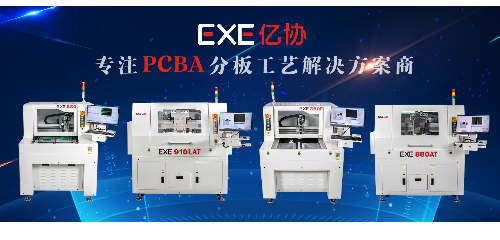
The trend of intelligent upgrading and prospect of PCB depaneling machines are as follows:
Trend of Intelligent Upgrading
Automation and Integration: The integration of PCB depaneling machines into automated production lines will be a key trend. They will be able to communicate and collaborate with other production equipment such as pick-and-place machines and soldering equipment. For example, through the establishment of an industrial Ethernet network, the depaneling machine can receive production instructions and board information from the upper computer system, and automatically adjust parameters such as cutting paths and speeds, realizing seamless connection of the entire production process and improving production efficiency.
Precision Improvement: With the continuous development of cutting technology, the precision of PCB depaneling machines will be further improved. Laser cutting technology, for instance, will continue to optimize the light path system and control technology to reduce the width of the cutting seam and improve the cutting accuracy to within microns. This enables the processing of PCBs with higher density and finer lines, meeting the requirements of advanced electronic products.
Intelligent Monitoring and Diagnosis: The future PCB depaneling machines will be equipped with more sensors and monitoring systems. They can monitor in real time the operation status of the equipment, such as the temperature and vibration of the cutting tool, as well as the cutting quality, detecting defects and abnormalities in a timely manner. Through data analysis and fault diagnosis algorithms, the system can accurately locate the cause of the fault and give corresponding repair suggestions, reducing equipment downtime.
Data Connectivity and Cloud Computing: The development of the Internet of Things and cloud computing technology will allow PCB depaneling machines to have stronger data connectivity. The production data of the equipment, such as production quantity, cutting parameters and energy consumption, can be uploaded to the cloud platform in real time. Manufacturers can use cloud computing to conduct big data analysis, optimize production processes, make production plans and conduct remote equipment management.
Human-Machine Interaction Optimization: The human-machine interface of PCB depaneling machines will become more intelligent and user-friendly. It is expected to adopt touch screen operation, voice control and other methods, making the operation more convenient and intuitive. Operators can set parameters, view equipment status and operate the equipment through simple operations. In addition, the intelligent human-machine interface can also provide operators with training materials and operation guidance to improve the efficiency and accuracy of operation.
Prospect
Market Expansion: The demand for PCBs in the fields of consumer electronics, communications, automobiles and medical treatment is increasing. The market scale of PCB depaneling machines is expected to grow at a compound annual growth rate of 7.0% from 2024 to 2030. Asia-Pacific region, especially China, Japan and South Korea, will remain the largest consumer market, while North America and Europe will also show strong demand.
Promotion of Emerging Technologies: The development of 5G, Internet of Things and artificial intelligence technologies will bring new opportunities to the PCB depaneling machine market. These emerging technologies require PCBs to have higher performance and reliability, promoting the continuous upgrading of PCB depaneling machines.
Customization and Diversification: With the diversification of electronic products, the demand for customized PCB depaneling solutions is increasing. Manufacturers will need to provide more flexible and customizable equipment to meet the needs of different customers.
Sustainable Development Demands: The attention to environmental protection and sustainable development is increasing. PCB depaneling machine manufacturers will focus on developing energy-saving and environmentally friendly equipment, reducing waste and energy consumption, and improving the utilization rate of materials.