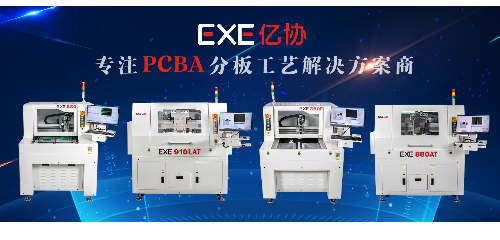
The Synergistic Development of PCB Routing Machine and the Trend of Electronic Circuit Miniaturization
Abstract: This article explores the synergistic relationship between PCB routing machines and the trend of electronic circuit miniaturization. It analyzes how the advancements in PCB routing machine technology have adapted to and driven the miniaturization trend, as well as the challenges and opportunities faced in this process. The impact on the electronics manufacturing industry and the future prospects of this collaborative development are also discussed.
I. Introduction
The rapid development of the electronics industry has led to an increasing demand for smaller, more powerful, and highly integrated electronic circuits. Electronic circuit miniaturization has become a prominent trend, which imposes higher requirements on the manufacturing processes and equipment, especially PCB routing machines. These machines play a crucial role in fabricating PCBs with finer traces, smaller vias, and higher density, enabling the realization of compact and high-performance electronic devices.
II. The Trend of Electronic Circuit Miniaturization
(A) The Need for Miniaturization
The continuous pursuit of smaller form factors in consumer electronics, such as smartphones, wearables, and IoT devices, drives the miniaturization of electronic circuits. Additionally, in fields like aerospace and medical electronics, where space and weight are critical, miniaturized circuits are essential for improved functionality and portability. For example, in modern smartphones, the PCB needs to accommodate a large number of components, including high-resolution cameras, powerful processors, and multiple sensors, within a limited space.
(B) Technical Challenges in Miniaturization
Miniaturization brings several technical challenges. Firstly, the reduction in trace width and spacing requires extremely high precision in drilling and routing operations. Secondly, the aspect ratio of vias (the ratio of depth to diameter) increases, making it more difficult to ensure proper plating and electrical connectivity. Thirdly, the thermal management of densely packed components becomes more complex, as heat dissipation is restricted in a small area. For instance, in high-density PCBs, the narrow traces may cause higher resistance and heat generation, which can affect the reliability of the circuit.
III. The Role of PCB Routing Machine in Miniaturization
(A) High-Precision Drilling and Routing
PCB routing machines have evolved to meet the precision requirements of miniaturization. They are equipped with advanced spindle motors and high-resolution positioning systems that can achieve micron-level accuracy in drilling and routing. For example, some modern machines can drill holes with a diameter as small as 0.1 mm and route traces with a width of 0.05 mm, ensuring the precise formation of the PCB layout for miniaturized circuits.
(B) Multi-Layer PCB Processing Capability
With the increasing complexity of miniaturized circuits, multi-layer PCBs are commonly used. PCB routing machines are designed to handle multi-layer PCB fabrication efficiently. They can precisely stack and align multiple layers, drill through-holes and blind vias, and route traces on each layer. This enables the integration of more components and functionality within a limited PCB area. For example, in a 10-layer PCB used in a high-end server motherboard, the routing machine can accurately create connections between different layers to support the high-speed data transfer and complex circuitry.
(C) Automation and Intelligent Control
To enhance productivity and quality in miniaturized PCB manufacturing, PCB routing machines incorporate automation and intelligent control features. They can automatically load and unload PCBs, adjust drilling and routing parameters based on the PCB design, and perform self-diagnosis and error correction. This reduces human errors and improves production efficiency. For example, an intelligent routing machine can analyze the CAD design file of a PCB and optimize the tool path to minimize drilling time and improve hole quality.