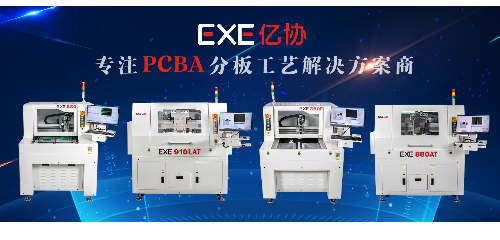
From blueprints to physical boards: The transforming magic of the PCB Routing Machine
In the world of electronic devices, the PCB (Printed Circuit Board, printed circuit board) is like a nervous system, connecting various electronic components to achieve complex circuit functions. The PCB Routing Machine (PCB routing machine) is the magic magician who converts the virtual circuit on the design diagram into a real PCB board, and it plays an indispensable role in the field of electronic manufacturing with superb technology and efficient operation.
First, the design: the blueprint of the dream
Everything starts with the design, which is the blueprint for the birth of the PCB. Electronic engineers use professional electronic design automation (EDA) software to carefully map out the PCB's circuit layout, component positions, and various electrical parameters. The design not only specifies the direction, width and spacing of each line, but also considers many complex factors such as signal integrity, power distribution, and heat dissipation. For example, in high-speed digital circuit design, impedance matching of the line must be precisely designed in order to avoid signal reflection and crosstalk. For high-power circuits, sufficient copper foil thickness and reasonable heat dissipation channel layout are the key to ensure the normal operation of the PCB. These design requirements are specified and planned in detail in the design diagram, providing a precise instruction set for subsequent PCB Routing Machine operation.
2. Data import and preprocessing: The prelude to magic
When the design drawing is completed, the relevant data needs to be imported into the PCB Routing Machine. This process is not a simple file transfer, but involves a series of complex operations such as data format conversion, integrity checking and preprocessing. Different EDA software generates design files in different formats, and the PCB Routing Machine needs to be able to recognize and transform these formats into internal data structures that the machine can understand and process. At the same time, during the import process, the machine will strictly check the data to ensure the correctness of the line connection, the matching of the component package and the compliance of the design rules. Once an error or potential problem is found, the system sends out an alert in time, prompting engineers to correct it. For example, if there is a short or open circuit in the line, it can be detected at this stage, avoiding material waste and time delays in subsequent processing.
In the data preprocessing stage, the PCB Routing Machine will also optimize and segment the line according to the design requirements and its own processing capacity. For some complex curve lines, it may be broken down into multiple straight line segments and arc segments, so that the machine can control the tool path more accurately during the machining process. In addition, the tool parameters, cutting speed, feed rate and other process parameters required for each processing step will be calculated to fully prepare for the actual wiring processing.
Third, machining: magic
At the heart of the PCB Routing Machine's magic is machining. Through the high-precision motion control system, it drives the tool to cut, drill, milling and other operations on the PCB board, and presents the lines and component mounting holes in the design drawing one by one.
When cutting lines, PCB Routing machines are equipped with ultra-fine milling cutters that can be as small as a few tenths of a millimeter in diameter. While rotating at high speed, the tool moves on the PCB board along a pre-planned path to precisely remove unwanted copper foil and form the required line. For example, when processing multi-layer PCB, it is necessary to carry out accurate alignment and interlayer connection between different layers. PCB Routing Machine can use its high-precision positioning system to ensure that the alignment error of each layer line is within a very small range and ensure the stability of signal transmission.
The drilling operation is to form component mounting holes and through-holes on the PCB board. According to different aperture requirements, the machine will automatically replace the appropriate drill bit, and control the depth and position of the drill hole. For tiny holes, such as those used to connect the inner lines of multi-layer PCBS, which may only be tens of microns in diameter, the PCB Routing Machine can still accurately complete the drilling task, thanks to its advanced drilling technology and sophisticated spindle control system.
The milling process is mainly used for the appearance processing of PCB boards and the processing of some special shapes. For example, the PCB board is processed into a specific profiled profile, or the grooves, heat dissipation channels and other structures are milled on the board. In the milling process, the PCB Routing Machine will reasonably adjust the milling parameters according to the material and thickness of the plate to ensure the smoothness of the machined surface and the smoothness of the edge.
Fourth, quality detection and control: magic verification
After the PCB Routing Machine completes the machining, it does not mean the end of the magic, and the quality inspection and control process is like the final verification spell to ensure that every PCB board meets the design requirements and quality standards.
The machine will use a high-precision optical inspection system to measure and compare key parameters such as line width, spacing, aperture and outline size on the PCB board. Quickly detect any possible machining errors or defects by comparing and analyzing the design data. For example, if the line width exceeds the design tolerance range, the line resistance may increase, affecting the signal transmission quality; Too small a aperture may cause the component to fail to mount properly. Once the problem is detected, the PCB Routing Machine will classify and deal with it according to the preset rules. For some minor defects, it can be corrected through the automatic repair function. For serious problems, the PCB will be marked as defective and the relevant information will be recorded for subsequent analysis and improvement.
In addition, the PCB Routing Machine will also perform electrical performance tests, such as connectivity tests, insulation resistance tests, etc., to ensure that the electrical connection of the PCB board is normal, and there is no short circuit or open circuit problems. These test data will be recorded and analyzed in real time to form a quality report, which provides an important basis for the quality control and process optimization of the production process.
5. Finished product output and application: Presentation of magic
After the baptism of layers of magic, a PCB physical board that meets the design requirements was finally born. It is transformed from a virtual idea in the design drawing into an electronic component carrier with practical functions, and will be applied to various electronic devices, such as smart phones, computers, automotive electronic systems and so on. In these devices, the PCB board closely connects the various electronic components together to achieve key functions such as signal processing, power distribution, and data transmission, providing a solid foundation for the normal operation of electronic equipment.
From the design drawing to the physical board, the PCB Routing Machine has accomplished an amazing transformation magic with its excellent technology and precision process. It not only improves the efficiency and accuracy of PCB manufacturing, but also promotes the continuous development and innovation of the electronics manufacturing industry. With the continuous progress of science and technology, the magic of PCB Routing machines will also continue to upgrade, creating more possibilities for the manufacture of more complex and high-performance electronic equipment in the future.